 |
December 2025 |
|
| |
Intro
We’re happy to be back in your inbox!
This edition explores how documentation teams can move toward connected and scalable knowledge systems with RDF, while also introducing a major update to Componize Review PDF designed to streamline collaborative validation.
|
🔄 New release
Componize Review PDF v2
|
Componize Review PDF just got a major upgrade, making collaborative PDF validation from Componize CCMS faster, clearer, and easier to run at scale.
With Componize Review PDF, you can run Review Campaigns with one or multiple validators on single documents or batches, and follow progress in a lightweight dashboard showing activity, annotations, and final Accept or Reject decisions.
Reviewers are invited by email, comment directly on the PDF with threaded discussions and @mentions, then submit a clear global verdict with a short justification.
APIs are available to automate key steps, pull or push critical review data, generate revision reports automatically, and extend Componize Review as an open platform to fit your processes.
👉 Want to try it on your own content? Reply to this newsletter and we will set up a test for your team!
|
|
| |
CCMS insight
RDF and connected documentation
|
RDF is gaining renewed attention as documentation teams move toward connected knowledge systems.
In a recent article, CJ Walker explains why RDF is becoming an important skill for technical communicators, helping them describe and maintain relationships between content across systems and languages.
At Componize, RDF is a core part of our CCMS and is used to manage metadata consistently across the entire content lifecycle. In practice, this enables:
- Always-consistent metadata
Titles, products, versions, statuses and other metadata stay aligned between the repository and the content, without batch jobs or manual fixes.
- Robust link management
References are handled as metadata, allowing links to be repaired automatically when content moves or is renamed.
- Open, extensible platform
Built around an RDF pivot that links content, metadata, and repositories, with an event-driven RDF automation pipeline (observers/interceptors) to extract and update metadata, plus multiple graph readers and writers to federate and synchronize metadata across several stores using flexible mapping strategies.
If you’d like to explore how RDF can support your documentation challenges:
|
 |
|
Case study
Accelerating consistency and translation for medical device labels and manuals
|
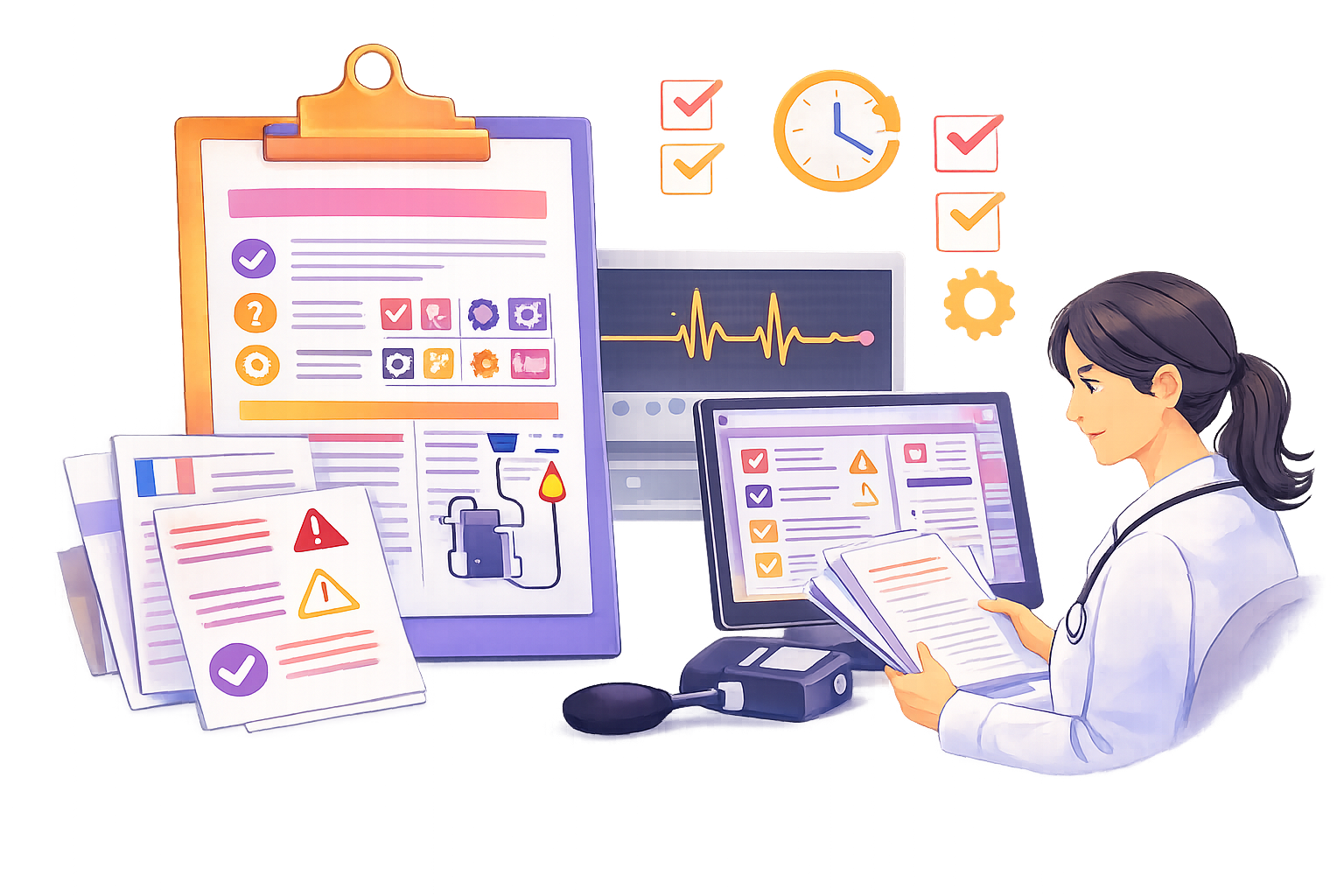
A world leader in medical devices for metabolic health management faced growing challenges around documentation consistency, translation volumes, and regulatory compliance across global markets.
Before adopting DITA XML and Componize CCMS, multiple teams worked in parallel on overlapping content, leading to inconsistencies, rework, and publication risks.
By implementing DITA XML and Componize CCMS, the organization introduced shared topics, reuse, and conditional content to ensure reliable updates across products and regions.
The results:
- 50% reduction in translation costs
- 60% faster translation timelines
- Fewer inconsistencies and manual rework
Componize has become a core pillar of their labeling and documentation strategy, supporting long-term consistency, collaboration, and global scale in a highly regulated environment
|
|
DITA in practice
Bpifrance publishes its first Dossier Projecteur in DITA
|
Bpifrance, France’s public investment bank that finances and supports French companies, from startups to large enterprises, has released its first Dossier Projecteur fully produced using the DITA XML standard, with Componize CCMS and the support of partner AmeXio.
By moving away from Word and InDesign workflows, the editorial team gained agility, productivity, and content ready for multichannel publishing and future AI use cases.
|
|
Curated reads
|
The technical writer in 2030
Fabrizio Ferri’s blog · Read time: 6 min.
What if the technical writer of 2030 became an orchestra conductor, assisted by AI but always in control?
In this short fictional piece, Fabrizio Ferri explores a future where structured content, governance, and human expertise remain central even in AI-augmented workflows.
|
|
| 📅 Meet us at DITA Molière
On January 26, 2026, join us in Paris at Bpifrance for the DITA Molière conference, the French event dedicated to structured content and DITA.
Componize will present, alongside our integration partner Amexio, a real-world case study on the strategic DITA implementation at Airbus, powered by Componize CCMS and Componize Review. Two of our customers, Prescrire and TOPSOLID, will also share how they implemented DITA with Componize CCMS.
|
| |
| Stay in touch
As we wrap up 2025, thank you for being part of the Componize journey. We look forward to continuing the conversation in the new year.
Warm wishes for the holidays and a successful start to 2026!
Best regards,
The Componize team.
|
|