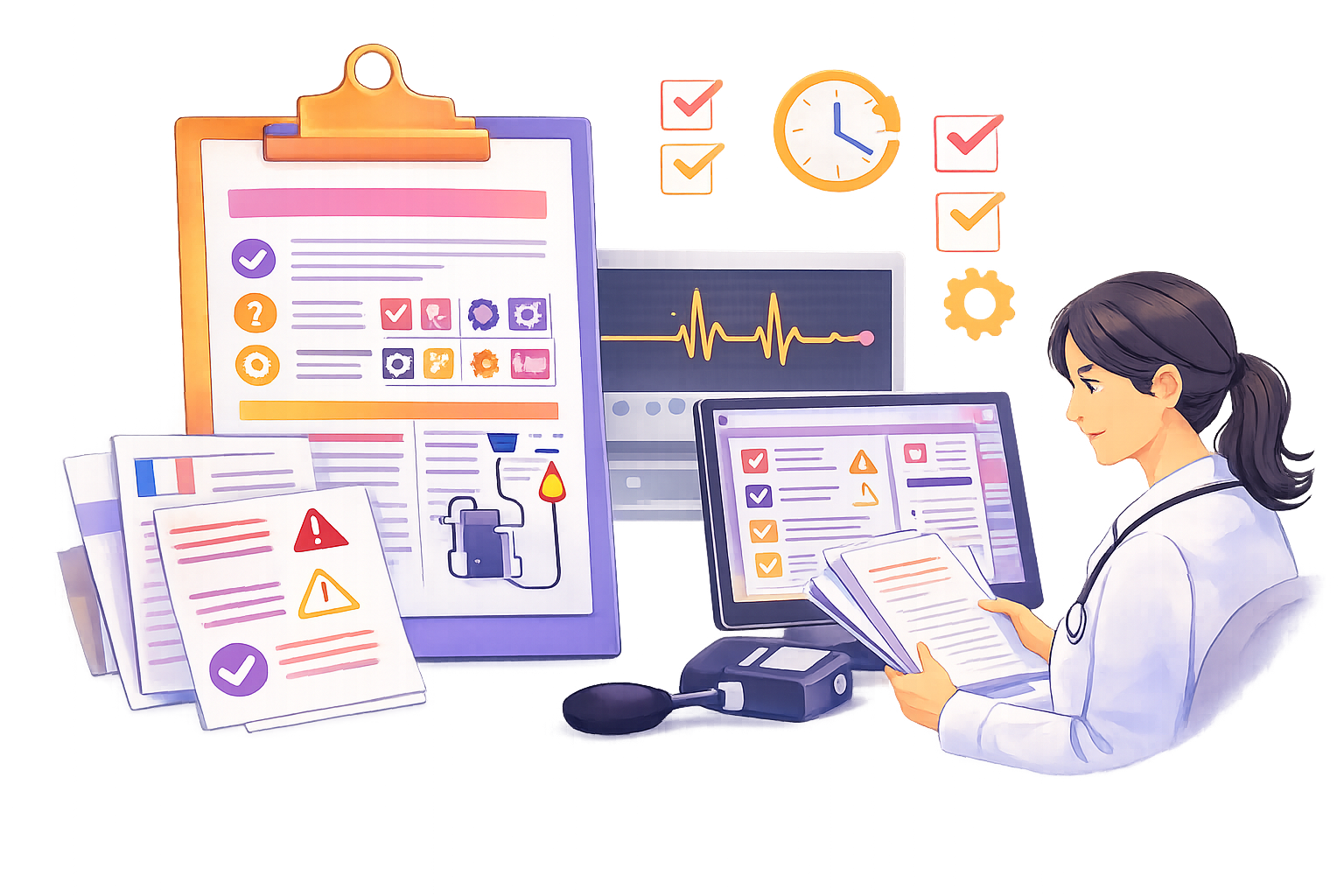
The Covid pandemic uncovered a whole host of previously ignored issues to do with how we work with each other. This is no different in the world of Technical Communications. Let’s look at what happened and how we can apply the workarounds we developed over the last couple of years to how we move on from now.
Pharmaceutical companies made changes to their submission processes for the approval of vaccines. Regulatory bodies agreed to using more up to date technologies for submissions, manufacturers, implemented crude but effective reuse mechanisms. This included streamlining and running many processes in parallel. And that particular concept of create once, review once, approve once and reuse many times came into its own in an industry that has previously only flirted with structured content.
This applies to medical devices too. New players came into the market to build ventilators, even if they have never previously created medical devices. The workflows for the submission and approval of drugs, devices and anything else that could help win the fight suddenly received the attention they deserve.
Work as effectively from home as you do in the office
We also witnessed a debunking of a pseudo fact that you had to be present in a physical space with your colleagues in order to be productive. This provided an opportunity for many new and existing tools to take a more prominent place in the way we meet virtually.
Looking at the plethora of tools that we have at our disposal, some are more effective than others. This may be the best time to see how we can reassure regulatory bodies of the effectivity of delivering content through CCMS. This applies to quality assurance engineers, managers and other actors regulated industries.
Yes, we do that already, however there are many ways for us to shorten the time it takes to release a document.
What is wrong with current documentation release lifecycles?
The review and approval process is the major culprit here, but with Componize Review, teams in regulated industries can simplify compliance processes, ensuring faster, smoother document approvals.
Here is a typical one, and I’m not even exaggerating:
- Someone creates specifications for the product which includes the documentation in tool A (IBM DOORS, Rallye, JIRA etc.)
- The final versions of specifications and the verification/validation procedures are extracted from that tool and put into tool B, an Electronic Document Management System. This is a QMS requirement for records management.
- An author retrieves specs from tool B, and other information from emails or documents dropped into a shared drive somewhere.
- The author creates the documentation in tool C, the CCMS, publishes it as a draft PDF, then takes it OUT of the CCMS and sends it by e-mail/shared folder or other to be reviewed.
- Reviews arrive at different rates and from different actors, and may be conflicting in the feedback: the author has to collate all of this, sometimes using a spreadsheet, to track all the feedback and actions taken to resolve them.
- The author then goes back to tool C, makes the modifications and goes back to step 4.
- Assuming the loop is complete for these informal reviews, the author now takes the last published version out of tool C once again and puts it into tool B for the document to be formally reviewed and approved, usually by electronic signature.
- The author, after having their fervent prayers answered by the gods of docs and pubs, has to, if they are lucky, click on the publish to distribution channel button in tool C. If they are not that lucky, they have to go to tool B, download the document and go to tool D, the distribution platform, to upload it for publication.
- The magic number I learnt when I was doing my masters all those years ago is 7 +/- 2. So here is the final step. The author now has to go back to tool B, to upload a report of the changes made to the document. To satisfy the requirements of a good QMS, all changes made to a document must be traceable and auditable.
After reading how a typical documentation release lifecycle happens, we ask you:
- How different is this process where you work?
- How much of it is done manually?
- How much of is repetitive?
Use your CCMS to review, edit and approve content
Wouldn’t it be simpler to:
- Use Componize CCMS that can create links to individual requirements, user stories or defects in whatever system they are kept in.
- After creating the documentation in the CCMS, send the source documents for approval from the CCMS.
- Work in the CCMS with reviewers in real time on the source documents, collate feedback and reviews using a simplified interface with a shallow learning curve.
- Use document approval workflows and electronic signatures embedded within the CCMS to complete the approval process prior to release.
- Push the document to the distribution platform at a click, or using another integrated workflow that acts depending on the document status, while at the same time delivering an extensive report detailing changes made, by whom, for what purpose, and the list of actors that formally approved the release.
Ok I made that process fit into the magic number formula I mentioned above, but you get my gist.
Tools like Componize Review make real-time collaboration and approval workflows seamless, ensuring teams stay aligned and productive.
In conclusion
A system that is basically a massive database of millions of snippets of information, is currently not trusted enough or is not capable of delivering on the (rightly so) stringent requirements placed on Quality Management Systems in regulated industries.
Medical device manufacturers have made a move towards using reusable structured topics to create documentation. There is still a lot to be done to integrate them in existing processes. Pharma has woken up, and I am now seeing conferences on the topic of content reuse.
Val Swisher (Content Rules), and David Turner (DCL) and many others have some very interesting thoughts and have given many webinars on the subject. While the links below focus on reuse strategies for pharmaceutical content, they do highlight some of the issues related to improving use of CCMSs to deliver content in regulated industries.
At Componize software, we are very aware of the issues at stake here, and over the course of the year, we’ll be presenting at ConVex, and Lavacon.
Sign up below for future Componize webinars, articles and whitepapers, and learn about the great new tool we are working on that integrates the principles I mentioned in this post: